






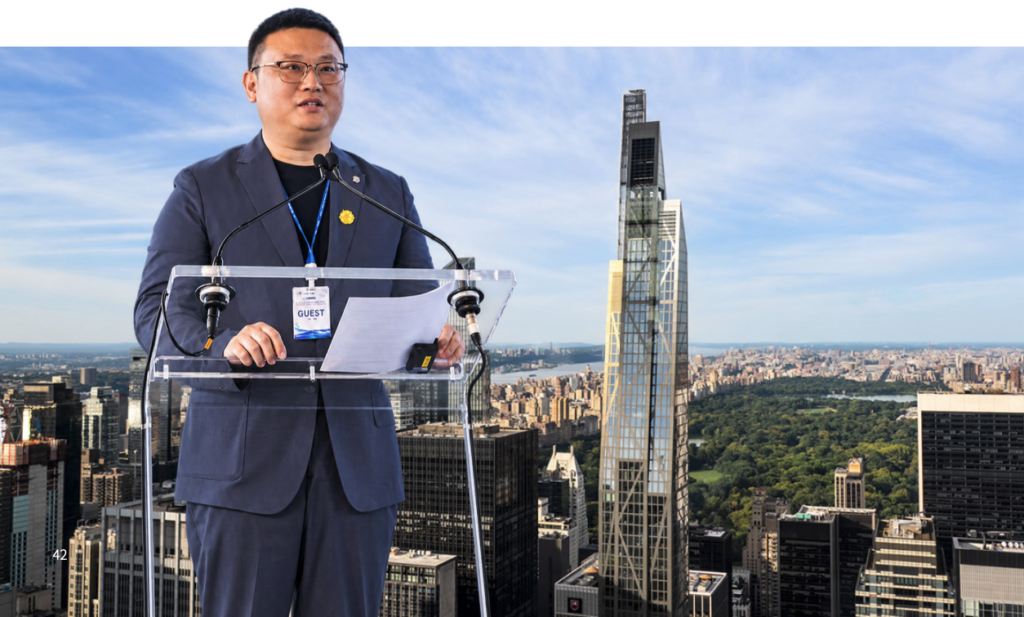
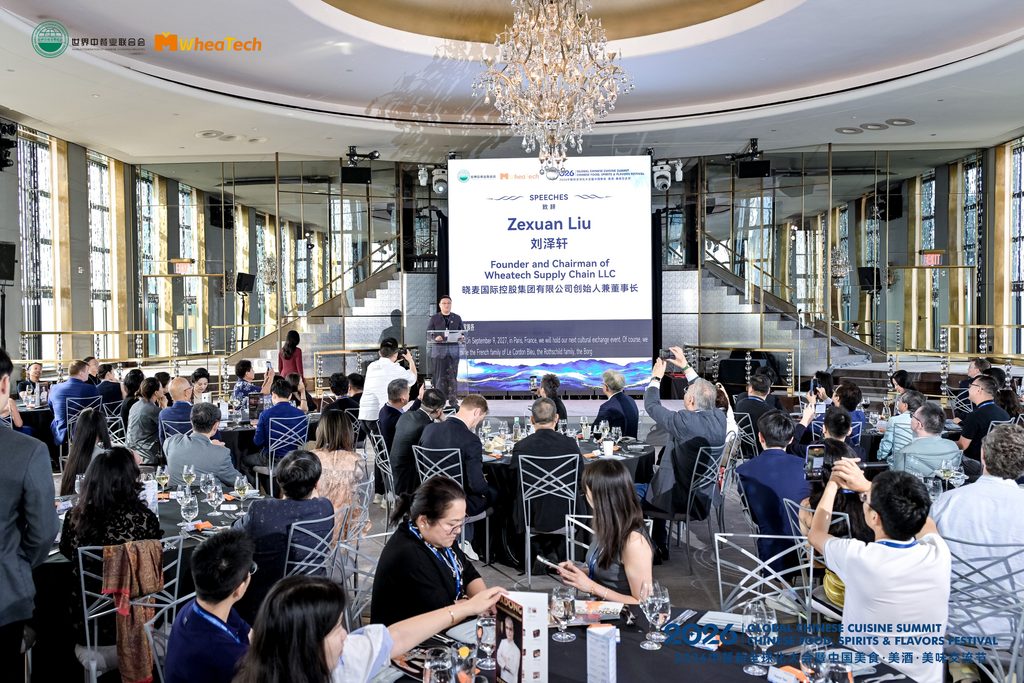
On September 8, Rockefeller Center in Manhattan hosted a gathering about the future of Chinese cuisine. Behind the event, themed “Chinese Roast Duck · Global Expression”, lay a larger question Liu Zexuan set out to answer: can a traditional Chinese dish that depends on a master chef’s experience be broken down into repeatable steps, standardized and reproduced across global markets?
By Yingling Zhu, The Restaurateur, reporting from New York
Edited by Lily
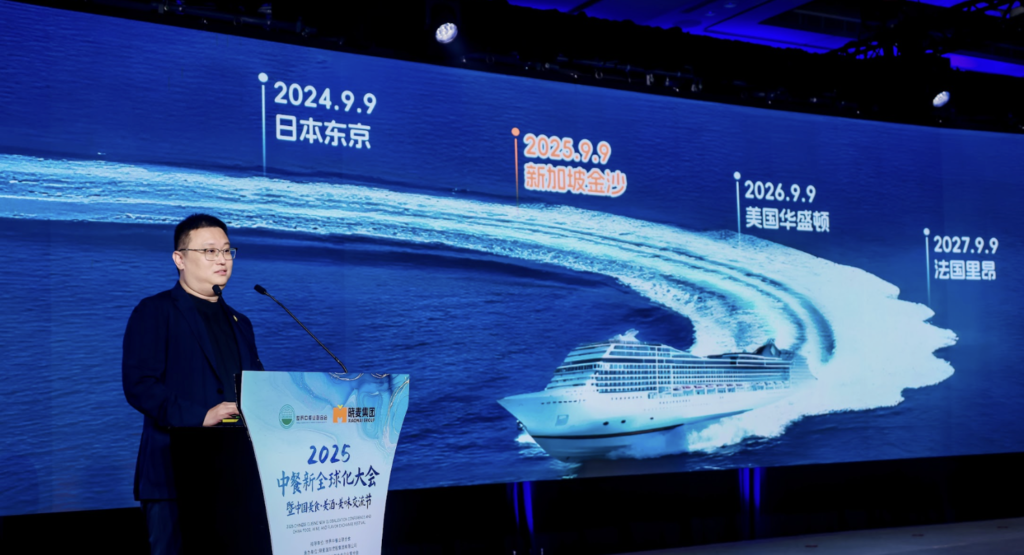
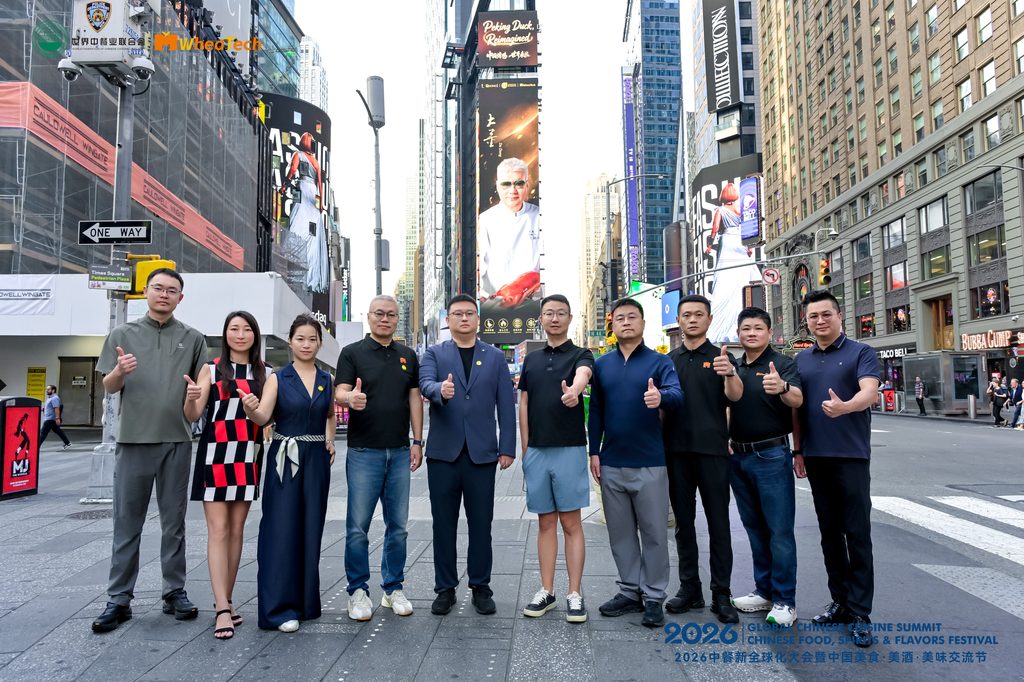
On September 7, 2026, “Chinese Roast Duck · Global Expression” lit up the giant screen in New York’s Times Square. A dish that has been beloved in America for half a century was about to reach American diners in a new form.
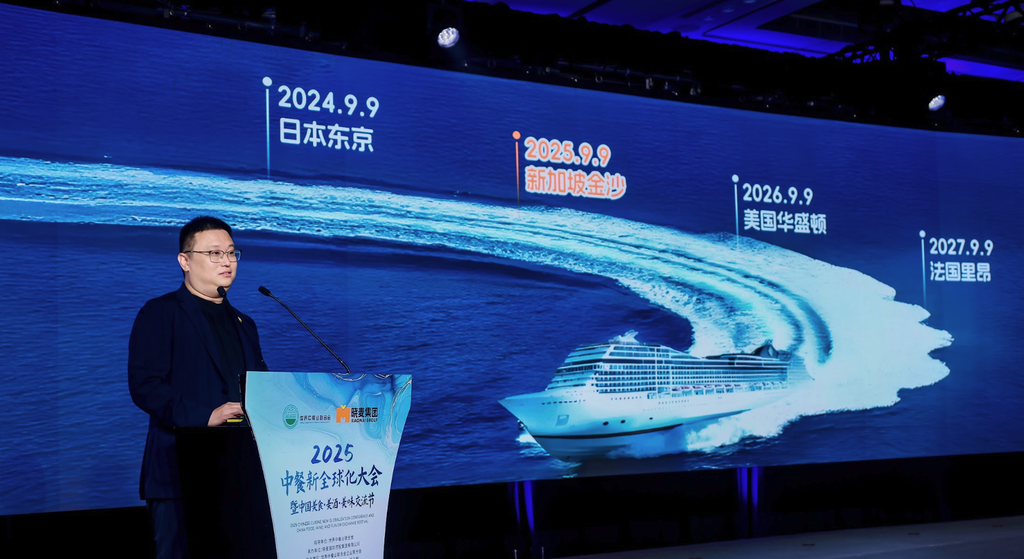
On September 8, restaurant brand founders and supply-chain experts from Los Angeles, Chicago, Washington and other cities gathered at Rockefeller Center in Manhattan. They had come from across the country for the 2026 Global Chinese Cuisine Summit · Chinese Food, Spirits & Flavor Festival — an event that had already drawn attention and discussion among New York’s local industry circles, not least because Da Dong was set to officially return to New York.
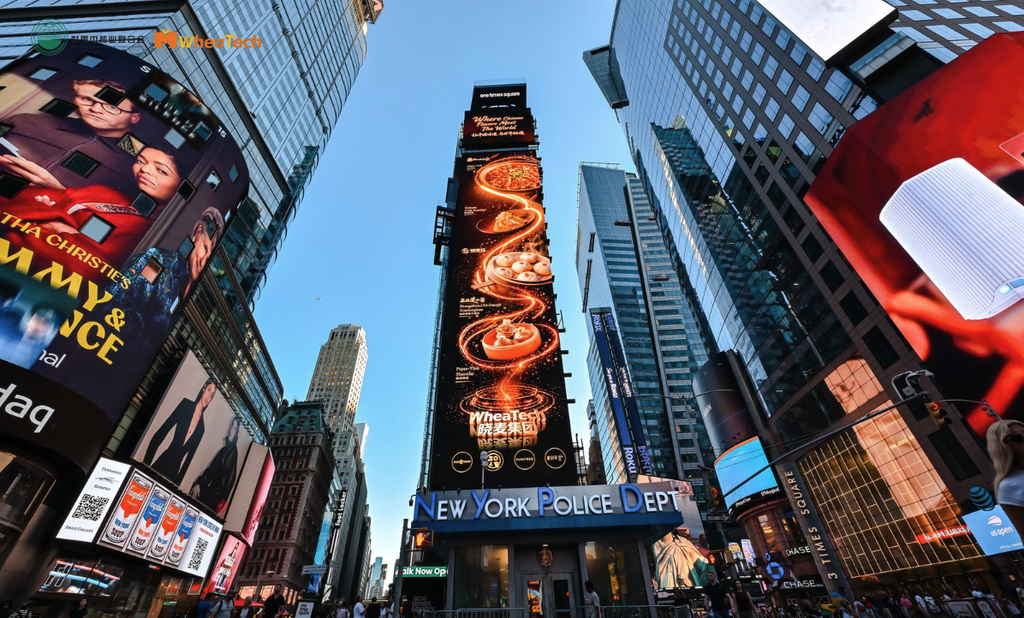
The organizer behind the event was Xiaomai International Holdings Group Co., Ltd, led by Liu Zexuan.
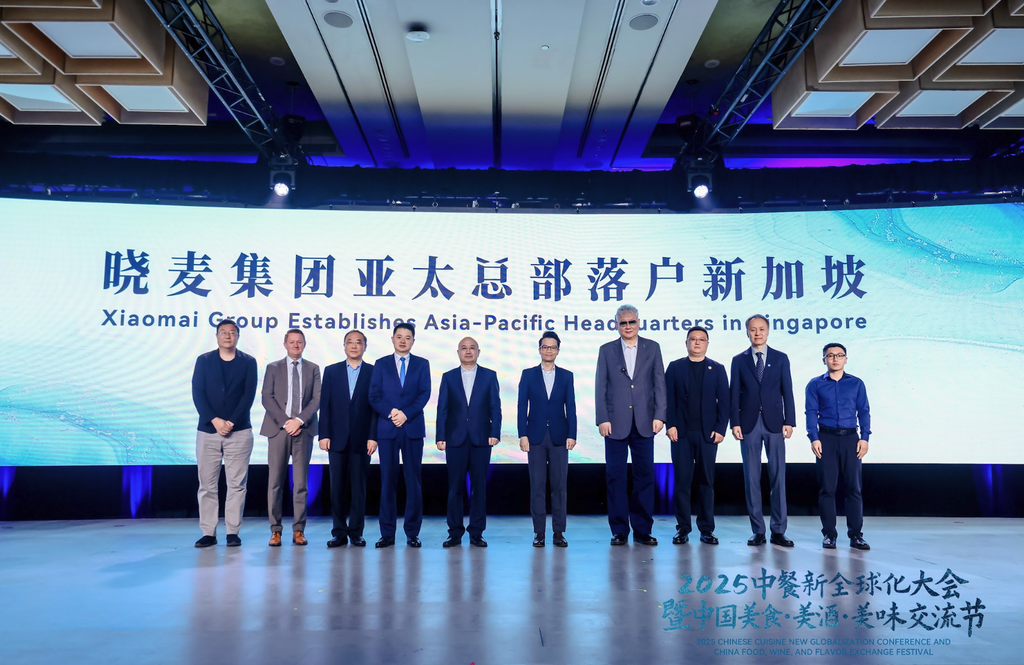
In fact, long before arriving in New York, Liu Zexuan — founder and chairman of Xiaomai — had already traveled to markets around the world, bringing his new vision for standardized Chinese cuisine to tables across continents. A year earlier, at Marina Bay Sands in Singapore, restaurant entrepreneurs, chefs, equipment makers and supply-chain professionals from 15 countries and regions gathered under the same theme. They witnessed efforts to preserve and modernize traditional Chinese culinary techniques, and when Liu announced that Xiaomai’s Asia-Pacific headquarters would be established in Singapore in partnership with Le Cordon Bleu, the room broke into sustained applause.
Liu connects restaurant professionals across countries in order to test one hypothesis: Can one roast duck maintain the same quality in different countries, different kitchens and in the hands of different operators? Can the classic flavors created by Chinese master chefs, and the sense of comfort they bring, be carried forward along a standardized production chain?
Liu told The Restaurateur that, after training, chefs in different markets can produce relatively consistent roast duck in commercial kitchens. Roast duck, he added, does not have to remain confined to Chinese banquets; it can also enter forms that local consumers already understand, such as sandwiches, pizza and sushi. In that sense, the September event was not only a product showcase, but also a live test of bringing this system into the U.S. market.
In Liu’s view, the globalization of Chinese cuisine is entering a new stage. In the past, Chinese food mainly followed chefs and restaurants overseas. What he hopes to build now is a cross-market supply-chain capability formed by ingredients, techniques, equipment and training. For the Chinese restaurant industry, this is about whether traditional flavors can break free from their dependence on a small group of highly skilled chefs and develop the ability to be delivered consistently across cities and countries.
A Serial Entrepreneur Following an Inner Passion
In 2017, serial entrepreneur Liu Zexuan graduated from Hupan University, the business school founded by Jack Ma. Nearly everyone in his cohort was an entrepreneur. “During that period, I slowly developed a sense of mission,” Liu later recalled. “I wanted to pass on the spirit of China’s master chefs and make the world fall in love with Chinese flavors.”
What he truly loved, he felt, had always been travel and food. When the two came together, bringing Chinese food culture to the world seemed like the best answer his life could offer.
In Liu’s vision, expanding abroad cannot stop at loading domestic products into shipping containers. Brands must rebuild production, compliance, warehousing, cold-chain, training, after-sales and distribution capabilities in the target market. He also treats it as a precondition that founders be on the ground in the market themselves and keep returning to it.
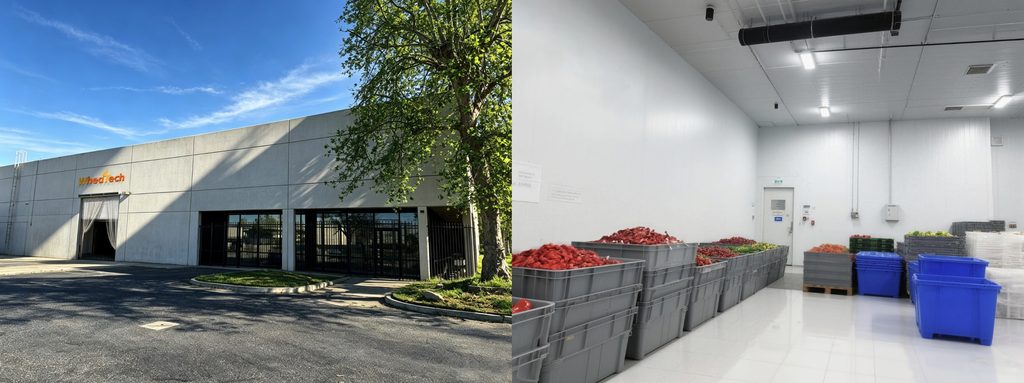
The U.S. market concentrates several of the hardest problems in Chinese food supply chains in one place. Meat and other protein products face high compliance and cold-chain barriers when transported across borders. Kitchen equipment, space and operating habits vary from restaurant to restaurant. Teams of chefs with the necessary skills are hard to scale quickly, while labor and training costs continue to affect chain expansion. Liu concluded that if ingredients still depend on long-distance imports, if critical parameters remain in the hands of individual chefs, and if after-sales support is far away overseas, even the best product will struggle to become a stable business.
Liu studied commercial kitchen equipment R&D systems in the United States, as well as convenience retail in Japan and Taiwan of China. He later summarized his observations in one phrase:
“Japanese management, German equipment and the flavor of traditional Chinese cooking.”
To him, Chinese cuisine’s strength lies in its flavor and cultural accumulation; its weakness is that those capabilities have long lived inside the personal experience of individual chefs and are difficult for factories, equipment and stores across regions to execute together.
In 2018, Liu began inviting traditional culinary professionals to participate in product R&D — including 12 master chefs of state-banquet caliber. The team later placed the phrase “The Flavor of Master Chefs, Just Downstairs” on its storefront signage. After that, they began experimenting with fresh-food factories, standardized equipment and store-level finishing kitchens. For Liu, this shift marked the beginning of a move away from chasing retail efficiency and toward building food industry capabilities. Fresh food became the bridge between two phases of his entrepreneurial journey.
The Vision of Master Chefs and the Future of Chinese Cuisine
Standardization in Chinese cuisine has always been controversial. For consumers, it is often associated with pre-cooked pouch meals and low-priced fast food. For chefs, heat control, split-second judgment and a practiced touch are difficult to replace completely with a set of parameters. Liu chose Peking roast duck as the model to test standardization not because it is easy, but because it is complex enough: from duck breed, seasoning and air-drying to oven temperature, humidity and timing, every step affects the final taste and texture. If even such a highly experience-dependent dish can have its key techniques broken down and reproduced with relative stability, then the problems standardization can solve go far beyond low-cost fast food.
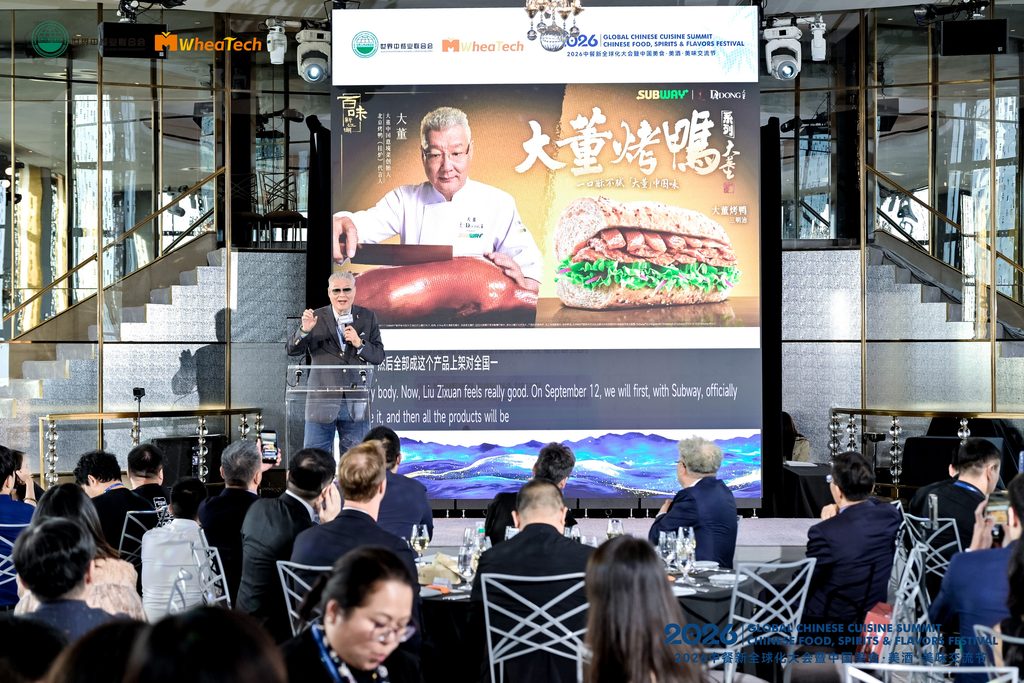
Liu said he had discussed this idea with Dong Zhenxiang, founder of Da Dong, for many years. On April 11, 2023, the two established a master-disciple relationship and gradually began collaborating on the roast duck supply chain.
Liu also became a disciple of Sun Dali, founder of the Red Chamber Banquet. He has continued to exchange ideas and collaborate with Wang Yijun, the doyen of Shandong cuisine, and other culinary masters, inviting them to participate in tastings and R&D discussions for standardized Chinese food products. To Liu, “the flavor of master chefs” is not merely a product concept, but an attempt to translate the taste experience accumulated by traditional chefs over many years into a set of standards that can be reproduced consistently.
Equipment is only one part of this system. The more important work is to translate traditional culinary professionals’ judgments about ingredients, heat and finished products into a language that food engineers, factories and store-level finishing kitchens can all share. Traditional culinary professionals define the flavor benchmark; engineers break down actions and parameters; factories handle upstream production; equipment governs the final stage in the kitchen; and the supply chain handles cold-chain logistics and cross-regional delivery.
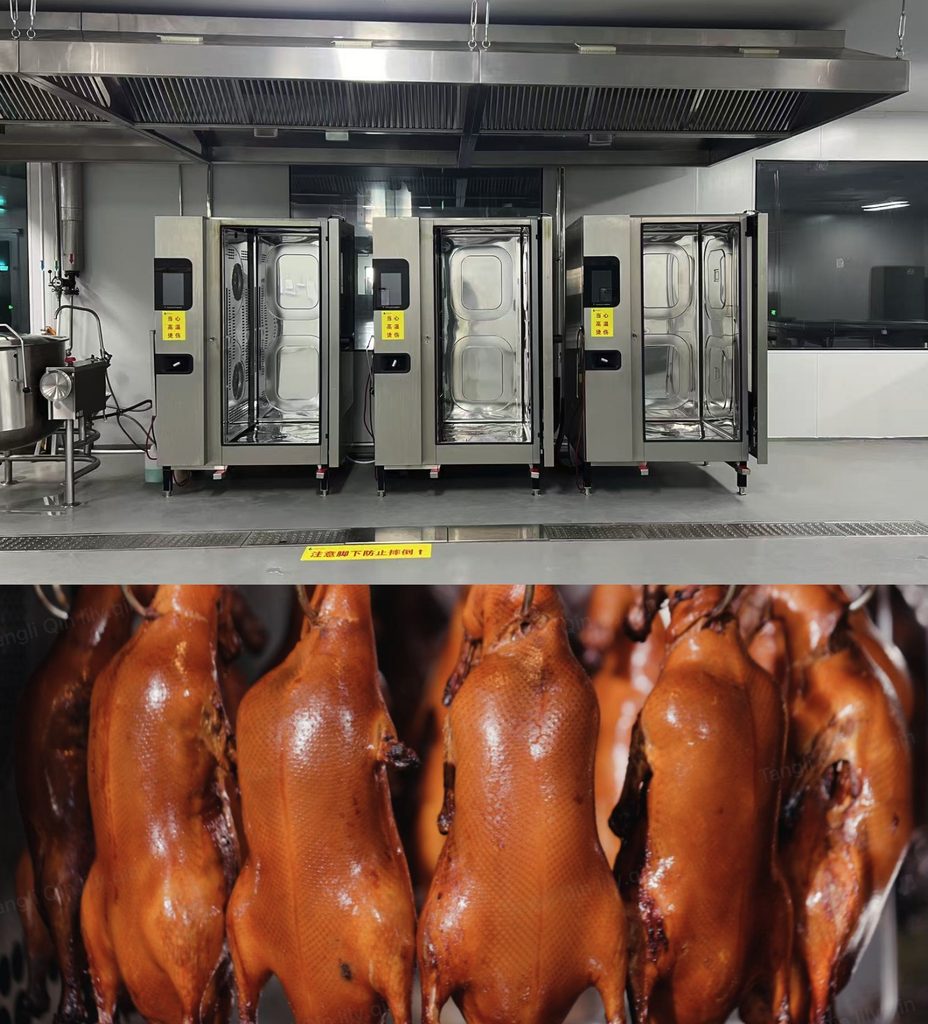
“A person’s ability cannot last for a hundred years, but a supply chain can,” Liu said. Many Chinese restaurant brands can build one store around a head chef and expand to several stores through an apprentice system. But as they scale further, the pace of training and developing skilled staff, variability in output and the span of control all become constraints. The value of the supply chain lies in preserving traditional experience so that a brand does not have to place all of its stability on one person.
This kind of standardization does not mean dishes no longer need chefs. R&D, aesthetics and taste judgment still come from professionals; the system is responsible for the repeatable parts. For high-end Chinese cuisine, this point is especially important. If a complex product like Peking roast duck can form a cross-regional delivery solution, then standardization is no longer merely a tool for low-priced restaurants to cut costs. It can also become the foundation for traditional brands to extend their life cycles and enter new markets.
In both China and the United States, many inheritors of traditional culinary techniques remain wary of industrialization and standardization in the industry. That concern is understandable. Yet many brands have also used standardized processes to reduce a store’s reliance on professional chefs and lower the threshold for employees entering the kitchen. “But the true vision of master chefs goes far beyond this,” Liu said. “This is what I have personally felt after speaking with a series of Chinese culinary masters. They are more open to new things, and their love for Chinese culinary culture and their sense of responsibility also make them willing to embrace better ways of carrying traditional flavors forward.”
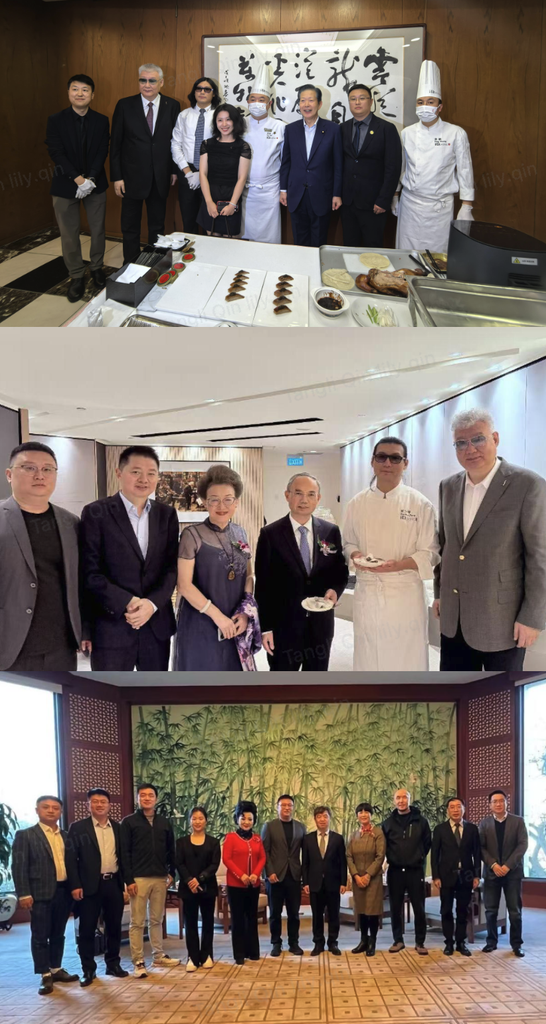
2025 — Hosting China’s Ambassador to Singapore at a Peking roast duck tasting (middle)
Visiting the Chinese Embassy in the United States and advancing “Peking Roast Duck Diplomacy” at the United Nations (bottom)
With the strong support of these master chefs, Liu has carried his vision for reforming and innovating Chinese culinary culture from China to Japan, from Singapore to the United States. Liu said,
“Our goal is to make the world fall in love with Chinese flavors.”
Turning the Impossible into the Possible
The “Chinese flavor” Liu speaks of does not necessarily have to be presented through a complete Chinese restaurant. It can be a seasoning, a flavor component, a set of menu modules, or a solution that includes ingredients and equipment and enters existing restaurants, hotels, institutional dining and retail systems. “We are not selling convenience food,” Liu said. “What we are expressing is the continuation of a culture — a place, a memory, a tradition that survives because someone believes it is worth protecting.”
This is also why Liu has been preparing a U.S. factory. Xiaomai’s first planned U.S. factory will be located in Irwindale, Los Angeles County — a facility of about 21,000 square feet with a designed annual capacity of 800,000 ducks. The site is planned as a production and distribution node for the U.S. West Coast market, intended to handle ingredient processing, preparation of the dressed ducks, standardized roasting, packaging, cold storage and regional distribution. The planned production line will connect zones for ingredient intake and inspection, processing, air-drying, low-temperature storage and finished-product packaging.
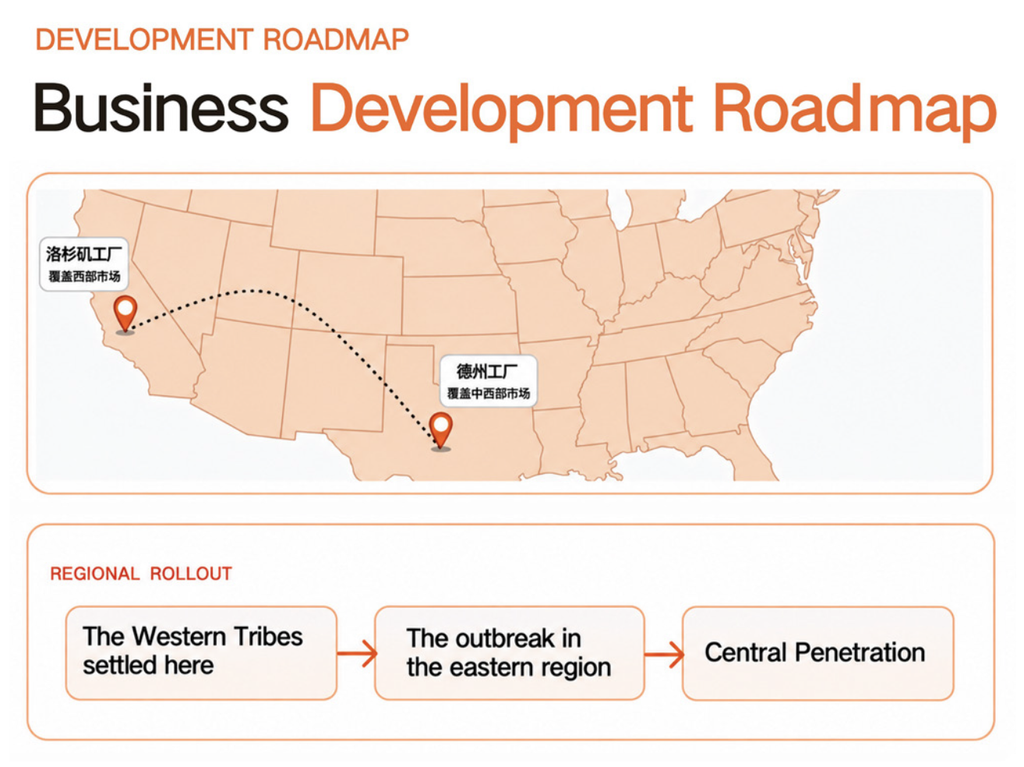
According to Xiaomai’s plan, the Los Angeles factory will first cover the U.S. West Coast market, then extend to other regions through distribution channels. Once orders, repeat purchases and delivery efficiency are verified, it will gradually expand toward the East Coast and the central United States. A Texas factory is also part of the company’s later plans. Beyond roast duck, planned categories include Sichuan dishes such as mapo tofu rice bowls and flour-based specialties such as Shengzhou soup dumplings.
What Liu wants to provide for the globalization of Chinese cuisine is not merely standardized products, but a restaurant solution: reducing complex procedures, lowering reliance on professional chefs, stabilizing output, reducing waste, and helping restaurants add more distinctive products and sales opportunities. For restaurants, this means they do not have to rebuild an entire professional back-of-house system simply to add one new item. Instead, they can hand high-complexity processes to a more mature supply-chain system. Ultimately, the question remains deeply practical: Can it be more labor-efficient, more stable, more profitable and easier to replicate from one store to multiple stores?
For the North American Chinese restaurant industry, where chef resources are insufficient and chain-restaurant presence remains far below that of mainstream restaurant sectors, this standardized solution may not only help restaurant operators reduce costs and improve efficiency, but also help local restaurant brands break through the bottlenecks of scale.
Aligning with internationally recognized standards is also a path for Chinese cuisine to gain greater influence on the world stage. In recent years, as the Bocuse d’Or’s Executive Chairman for China, Liu has actively traveled among inheritors of China’s major regional cuisines. Through the competition, he hopes young Chinese chefs can use China’s thousand-year culinary techniques as their foundation while deeply studying the international standards and innovative ideas of French cuisine. At the same time, he hopes the global culinary world can truly understand the cultural depth, refined techniques and distinctive ingredients of China’s regional cuisines, advancing the international expression of Chinese food culture and injecting Eastern inspiration into global culinary innovation.
Even more valuable, Liu believes, is that the competition can strongly drive systematic industrial upgrading. The rigorous standards and precise presentation requirements of international competitions force quality and efficiency gains across the supporting segments of the chain — ingredient pre-processing, cold-chain logistics, central kitchens and the industrialization of individual dishes — accelerating Chinese cuisine’s movement toward standardization, industrialization and digitally enabled operations.
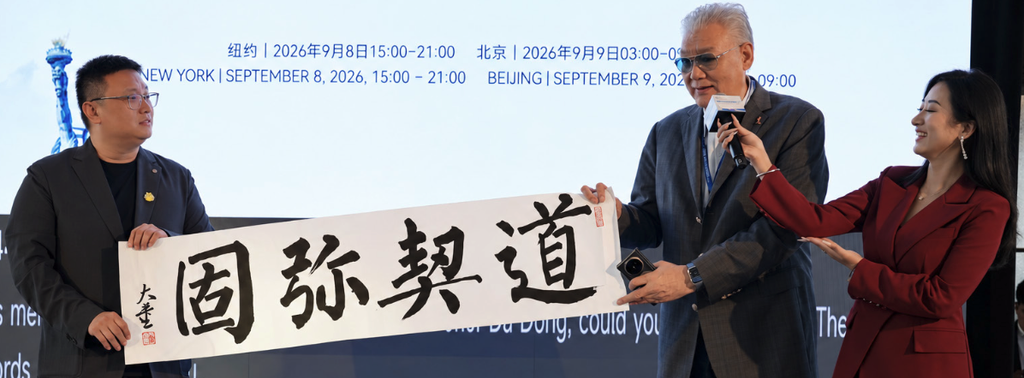
At the event, Da Dong founder Dong Zhenxiang said in his remarks that Liu Zexuan had “made the impossible possible.” The remark drew prolonged applause from the audience. Liu felt that years of effort had been recognized, strengthening his determination to keep moving forward.
After the applause faded, someone asked him how much longer this road would continue. He thought for a moment and said:
“Inheritance does not mean clinging to the past, and innovation does not mean forgetting our roots. Making Chinese flavors a high-quality daily experience within reach of consumers around the world is the answer that our generation of industry builders must deliver.”